Winter changes how your home uses electricity.
Heaters come out of storage. Electric blankets go back on the bed. Clothes dryers run more often. More appliances are used indoors at the same time. Rain, wind and damp conditions can also affect outdoor power points, garden lighting, sheds and alfresco areas.
If something in your Perth home smells burnt, feels hot, buzzes, sparks, trips repeatedly or looks damaged, stop using it and call a licensed Perth residential electrician.
Key takeaways
- Check heaters, electric blankets and stored winter appliances before use.
- Plug portable heaters directly into a wall outlet, not a power board or extension lead.
- Keep heaters at least one metre away from curtains, bedding, clothing and furniture.
- Check outdoor power points, garden lighting and shed outlets after rain or storms.
- Test smoke alarms and RCD safety switches before winter appliance use increases.
1. Check stored winter appliances before using them
Many winter appliances sit unused for most of the year.
Before plugging them back in, check portable heaters, electric blankets, heated throws, fan heaters, oil heaters and older appliances stored in cupboards, sheds or garages.
Look for frayed cords, damaged plugs, cracked casing, exposed wiring, scorch marks, unusual smells, dust build-up or damaged controls.
If the appliance looks damaged, smells burnt, heats unevenly or trips the power, do not keep using it.
2. Use portable heaters safely
Portable heaters are one of the biggest winter electrical risks in Perth homes.
They draw a lot of power and produce heat, often in bedrooms, living rooms and small spaces where soft furnishings are nearby.
Before using a heater, make sure it has no visible damage, sits flat and stable on the floor, has clean vents and is kept clear of clothing, bedding, curtains and furniture.
Keep heaters at least one metre away from anything that can catch fire.
Do not place a heater near the bed while sleeping. Do not leave it running unattended. Do not cover it. Do not use it to dry clothes.
If it sparks, smells strange, makes unusual sounds or trips the power, turn it off at the wall and stop using it.
3. Do not overload power points with winter appliances
Winter is when overloaded outlets become more common.
A room may have one power point, but people want to run a heater, lamp, phone charger, laptop, TV and other appliances from the same area. That often leads to power boards, double adaptors and extension leads being used as a shortcut.
Avoid plugging heaters into power boards, double adaptors, extension leads, old multi-plug adaptors or overloaded wall outlets.
A power board may be fine for low-load items like a modem, lamp or phone charger. It is not a safe solution for running a portable heater.
If you need heating in a room that does not have enough outlets, the better option is to have the room assessed and consider a proper powerpoint installation.
A power point should not feel warm. A power board should not smell burnt. A circuit should not keep tripping when a heater is switched on. If that happens, get it checked.
4. Be careful with electric blankets and heated bedding
Electric blankets and heated throws are useful in winter, but they need to be checked before use.
Before putting one back on the bed, check for frayed cords, exposed wiring, damaged controls, scorch marks, uneven heating, creasing or damage around the plug.
Do not use an electric blanket if it smells unusual, heats unevenly or looks worn.
Do not fold an electric blanket while it is in use. Avoid storing it tightly folded, as this can damage the internal wiring. Do not place heavy items on top of it.
Turn it off before sleeping unless the product instructions clearly state it is designed for overnight use.
5. Use clothes dryers safely during wet weather
Perth winter often means fewer good days for drying clothes outside, so dryers usually get used more often.
Dryers combine electricity, heat and lint, so they should be treated carefully.
Clean the lint filter after each use. Do not overload the dryer. Keep the area around it clear. Make sure the laundry is well ventilated. Do not run the dryer when you leave the house.
If your dryer smells hot, makes unusual noises, takes much longer than usual to dry clothes, trips the safety switch or makes the power point feel warm, stop using it until the issue is checked.
Always let the dryer complete its cool down cycle before switching it off or emptying it.
6. Check outdoor power points after rain and storms
Perth winters can bring rain, wind and damp conditions.
Outdoor electrical fittings are more exposed during this time, especially around patios, alfresco areas, sheds, gardens, pool equipment and exterior lighting.
Check for cracked covers, loose outlets, exposed cords, damaged extension leads, water near electrical equipment, flickering garden lights or appliances stored outside without weather protection.
Only use outdoor-rated electrical equipment outside.
Do not run indoor extension leads through wet grass, garden beds or exposed patio areas. Do not keep using outdoor lights or power points just because they still work.
If an outdoor outlet, shed circuit or garden lighting trips the power after rain, do not keep resetting the switch. Moisture may be getting into the fitting, or there may be a fault in the circuit.
7. Know what to do when your safety switch trips
Winter can reveal faults that were not obvious before.
A heater may trip the power. A dryer may trip the RCD. Outdoor lighting may fail after rain. A kettle, slow cooker or appliance may cause a circuit to cut out when several things are running at once.
If your safety switch trips once and it is safe to do so, unplug the appliance you were using and reset the switch.
If it trips again, stop. Do not keep resetting it over and over. The safety switch may be detecting a fault, moisture issue, damaged appliance or wiring problem.
If your RCD does not trip immediately when tested, will not reset, or keeps tripping during normal winter use, book electrical fault finding.
8. Test smoke alarms before winter appliance use increases
Smoke alarms are important all year, but winter is a good time to check them because more heat-producing appliances are being used indoors.
Before winter appliance use increases, check each smoke alarm sounds when tested, alarms are not more than 10 years old, batteries are replaced where required, dust is not blocking the alarm, and alarms have not been removed, covered or disconnected.
For WA rental, sale and hire properties, compliant smoke alarms must be working, not more than 10 years old and permanently connected to consumer mains power, unless a permitted 10-year non-removable battery alarm is allowed because mains wiring is not practical.
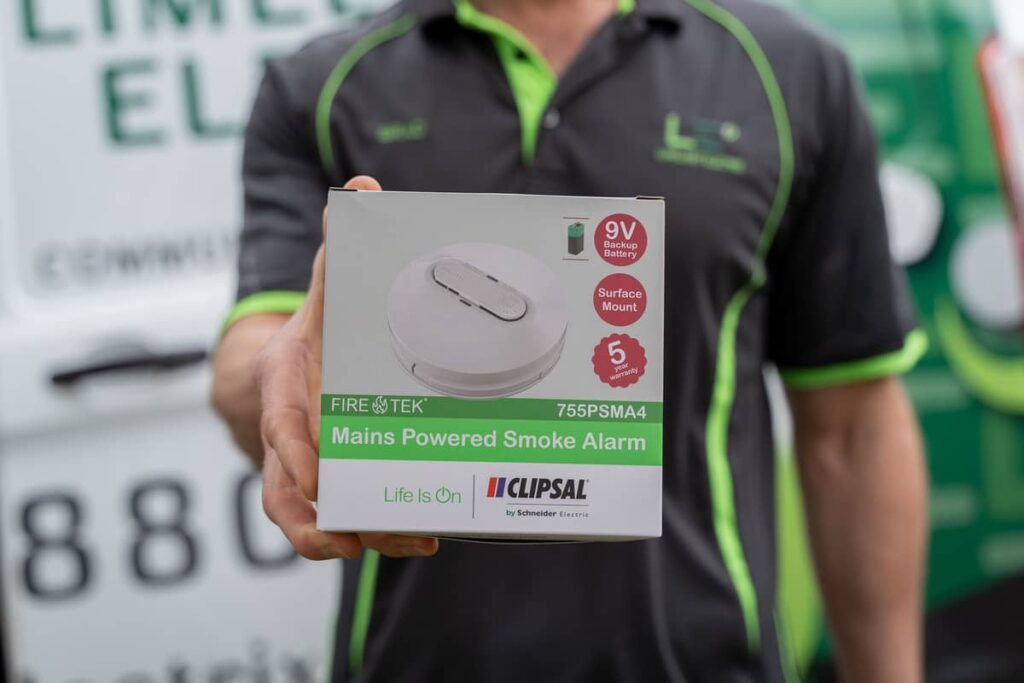
If your smoke alarms are beeping, missing, damaged or out of date, book a smoke alarm service.
Why winter puts more pressure on your electrical system
In winter, your home often handles more electrical load than usual.
You may be using heaters, electric blankets, dryers, kettles, slow cookers, extra lighting and other appliances more often. Some draw a lot of power. Some may have been stored away for months. Others may be used in rooms that do not have enough power points.
That is when people start relying on power boards, extension leads and double adaptors. It is also when existing faults become more obvious.
A heater may trip the power. A dryer may smell hot. Outdoor lights may stop working after rain. A safety switch may refuse to reset. These are not issues to ignore.
Winter electrical safety checklist for Perth homes
Before winter use increases, check:
- heaters and electric blankets are clean and undamaged
- heaters are kept at least one metre away from bedding, curtains and furniture
- heaters are plugged directly into wall outlets
- dryer lint filters are cleaned regularly
- outdoor power points are not cracked, loose or water affected
- RCD safety switches trip when tested
- smoke alarms are working and in date
When to call a Perth electrician this winter
Some checks are fine for homeowners. You can inspect appliance cords, clean heater vents, test smoke alarms, press the RCD test button and unplug appliances that are not being used.
But electrical faults need proper testing.
Call a licensed electrician if your heater trips the power, your dryer trips the safety switch, your RCD keeps tripping, a power point feels warm, switches buzz or spark, outdoor power fails after rain, lights flicker when several appliances are running, or you feel tingles from appliances, taps or metal fittings.
Do not pull apart power points, switches, outdoor outlets or switchboards yourself.
If you want a broader check before winter, book an electrical safety inspection.
Need your home checked before winter?
If you are using heaters, electric blankets, dryers, outdoor lighting or older appliances this winter, it is worth making sure your home’s electrical system is safe.
At Limelight Electrix, we help Perth homeowners with safety inspections, RCDs, smoke alarms, switchboard upgrades, power points, fault finding and electrical repairs.
Book a Perth electrician today and get your home ready for winter.