Smoke alarms are easy to ignore until they start chirping, fail during a test, or come up during a property sale or rental inspection. But if you live in Perth or anywhere else in WA, the difference between a mains-powered smoke alarm and a battery-powered smoke alarm matters.
In simple terms, a mains-powered smoke alarm is connected to your home’s 240V electrical supply. A battery-powered smoke alarm runs from a battery only. Both are designed to detect smoke, but they differ in reliability, installation, maintenance and legal compliance.
For many WA homes, this is not just a question of preference. It can also be a compliance issue.
Key Takeaways
- Mains-powered smoke alarms are connected to your home’s 240V power supply.
- Battery-powered smoke alarms rely on battery power only.
- Mains-powered alarms usually include a backup battery for power outages.
- In WA, mains-powered smoke alarms are required in many common situations, including homes being sold, rented or hired.
- For WA homes being sold, rented or hired, battery-powered smoke alarms are only allowed in limited situations where mains wiring is not practical.
- Smoke alarms must be replaced every 10 years.
- Mains-powered smoke alarms must be installed, connected and disconnected by a licensed electrician.
What is a Mains-powered Smoke Alarm and How Does It Work?
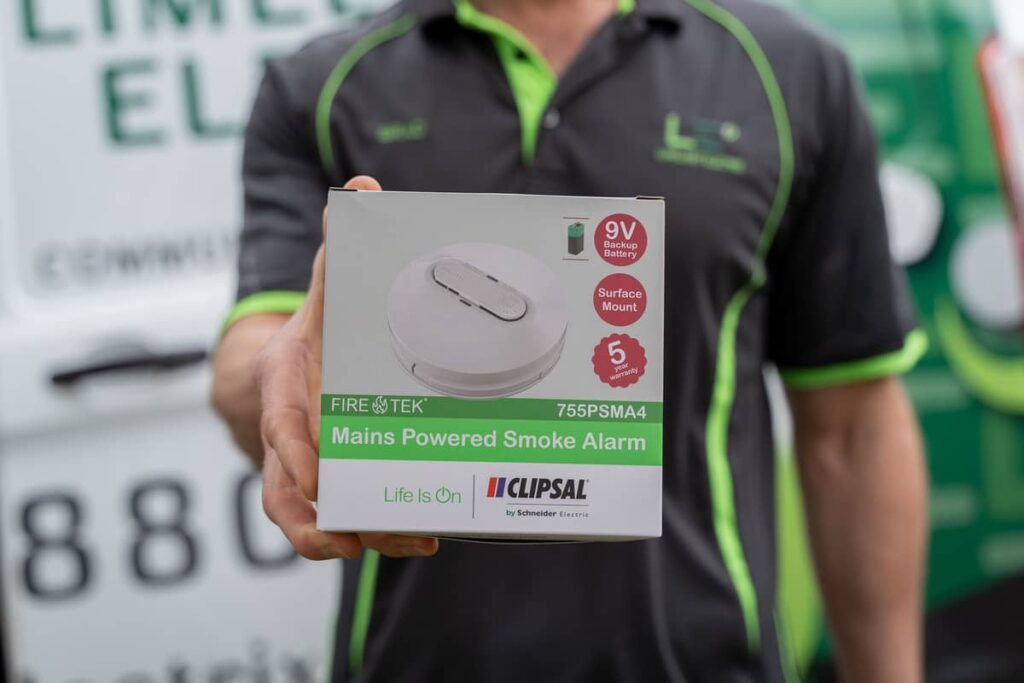
A mains-powered smoke alarm is wired into your home’s electrical system. It gets its main power from the building’s 240V supply and usually has a backup battery inside the unit, so the alarm can still work during a power outage.
This is the type of smoke alarm commonly required in WA homes. DFES recommends mains-powered smoke alarms wherever possible because they provide more reliable ongoing protection than alarms that rely on battery power alone.
Mains-powered alarms are commonly used in new homes, renovated homes, rental properties, homes being sold, short-stay accommodation, and properties where long-term compliance matters.
The main benefit is simple. You are not relying on someone remembering to change a battery to keep the alarm working.
What is a Battery-powered Smoke Alarm and How Does It Work?
A battery-powered smoke alarm is not connected to the home’s electrical supply. It runs from a battery only.
Older or cheaper models may use a replaceable 9V battery. Where battery-powered smoke alarms are permitted for WA compliance, they generally need to have a 10-year non-removable lithium battery.
Battery-powered alarms are easier to install because they do not need electrical wiring. That makes them useful in some homes where running new cabling is difficult, expensive or physically not possible.
But in WA, they are not always allowed as a substitute for mains-powered alarms. For homes being sold, rented or hired, battery-powered smoke alarms are only permitted where there is no hidden space to run the required electrical wiring and there is no suitable alternative location. This may apply to some homes with concrete ceilings or flat roofs with no ceiling space.
Outside these limited situations, the use of battery-operated alarms may require local government approval.
So while battery-powered alarms can be useful, they are not a shortcut around WA smoke alarm requirements.
Main Differences Between Mains-powered and Battery-powered Smoke Alarms
The main difference is the power source.
A mains-powered smoke alarm uses your home’s electrical supply as its main power source. A battery-powered smoke alarm relies entirely on its battery. That difference affects reliability, installation, maintenance and legal compliance.
| Feature | Mains-powered smoke alarm | Battery-powered smoke alarm |
| Main power source | Home’s 240V electrical supply | Battery only |
| Backup power | Usually has a backup battery | No separate backup power source |
| Installation | Requires a licensed electrician | Often easier to install |
| Reliability | More reliable for long-term protection | Depends fully on battery condition |
| WA compliance | Required in many common situations | Only allowed in limited situations for sale, rent or hire compliance |
| Maintenance | Test, clean and check backup battery | Test, clean and replace battery where needed |
| Best suited for | Permanent, compliant home protection | Limited use where mains wiring is not practical |
Which Type of Smoke Alarm is More Reliable?
Mains-powered smoke alarms are generally more reliable because they are not relying only on a battery.
A battery-powered alarm can only work if the battery has charge, is installed correctly and has not been removed. Anyone who has dealt with a chirping smoke alarm knows what often happens. The battery comes out, then the alarm is forgotten.
A mains-powered smoke alarm still needs maintenance, but its main power source is the home’s electrical supply. If it has a backup battery, it has another layer of protection during a power outage.
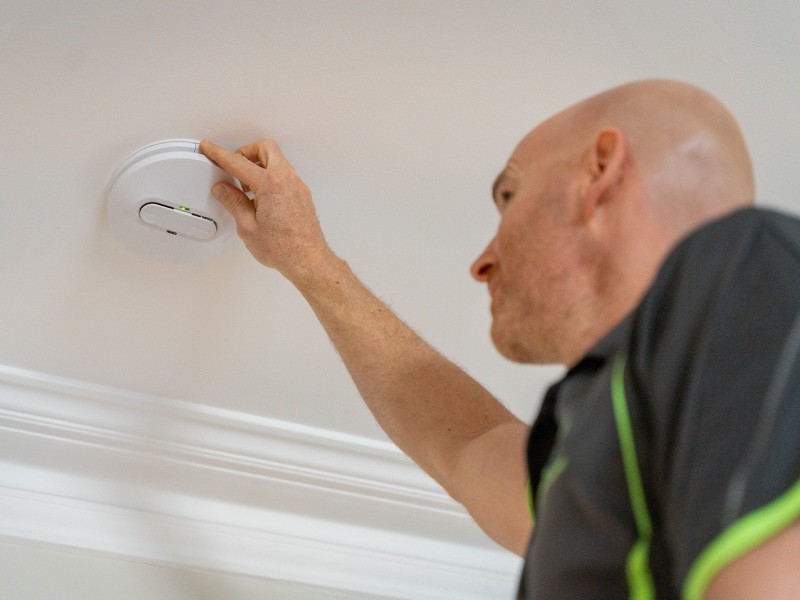
You still need to test your alarms, check the indicator light, clean dust and cobwebs, replace the backup battery if required, and replace the whole alarm once it reaches 10 years old.
Are Mains-powered Smoke Alarms Required in WA?
In many cases, yes.
In WA, mains-powered smoke alarms are legally required if your home has:
- been newly built since 1 July 1997
- had residential extensions or significant renovations since 1 July 1997
- changed ownership since 1 October 2009
- been made available for rent or hire since 1 October 2009
DFES states that these homes are required by law to have mains-powered smoke alarms.
WA Government guidance also states that dwellings must have compliant smoke alarms before transfer of ownership, rent or hire. These alarms must be in working order, permanently connected to mains power and not more than 10 years old.
That means if you are selling, renting out or offering a Perth property for short-stay accommodation, smoke alarms are not something to leave until the last minute.
Related article: Smoke Alarm Installation Guide: Regulations and Everything You Need to Know
Can I Use Battery-powered Smoke Alarms Instead?
Sometimes, but only in limited situations.
For WA homes being sold, rented or hired, a battery-powered smoke alarm is only permitted where a mains-powered alarm cannot reasonably be installed. This may include homes with concrete ceilings or flat roofs where there is no ceiling space to run wiring.
Even then, the alarm generally needs to be a 10-year non-removable lithium battery model.
Battery-powered smoke alarms are not a default alternative just because they are cheaper or easier to install.
If your home can reasonably have a mains-powered alarm installed, that is usually the required and recommended option.
Quick Comparison: Which Smoke Alarm Do You Need?
You may need a mains-powered smoke alarm if:
- your home is being sold
- your home is rented or will be rented
- your home is used for short-stay accommodation
- your home was built after 1 July 1997
- your home has had significant renovations
- your current smoke alarm is old, missing or non-compliant
- you want a more reliable long-term setup
A battery-powered smoke alarm may be suitable if:
- mains wiring is not practical
- there is no hidden space to run electrical wiring
- the ceiling is concrete
- the roof is flat with no ceiling space
- a 10-year non-removable lithium battery model is allowed
- the property does not fall under requirements that demand mains-powered alarms
If you are not sure, review DFES guidance on buying smoke alarms or speak to a licensed electrician before making a decision.
When to Call a Perth Electrician
Call a licensed electrician if:
- your smoke alarm is mains-powered and needs replacing
- your alarm is more than 10 years old
- your alarm keeps chirping after cleaning or battery replacement
- your alarm does not sound when tested
- you are selling or renting your home
- you need smoke alarms installed for compliance
- you want interconnected smoke alarms
- you are unsure whether your current alarm setup meets WA requirements
Smoke alarms are small devices, but they do a big job. If they are old, disconnected, installed in the wrong place or powered incorrectly, they may not protect your home when it matters.
Need Your Smoke Alarms Checked or Replaced?
If your smoke alarms are old, chirping, missing, damaged or not compliant, it is worth getting them checked properly.
At Limelight Electrix, we help Perth homeowners with smoke alarm installation, replacement, testing and compliance checks. We can assess your current setup, replace outdated alarms and make sure your home has the right type of smoke alarm installed safely.
Book a licensed Perth electrician today and make sure your smoke alarms are ready when you need them.
Frequently Asked Questions
Which is more reliable, mains-powered or battery-powered smoke alarms?
Mains-powered smoke alarms are generally more reliable because they are connected to the home’s electrical supply and usually have a backup battery. Battery-powered alarms can still work well when maintained properly, especially sealed 10-year lithium models, but they rely on battery power only.
Are 10-year lithium battery smoke alarms good?
Yes, 10-year lithium battery smoke alarms are a better option than old 9V battery alarms because the battery is sealed inside the unit and designed to last for the life of the alarm. However, they are still battery-powered alarms, not the same as mains-powered alarms with backup battery protection.
Do mains-powered smoke alarms still have batteries?
Yes, many mains-powered smoke alarms still have batteries. The battery is usually a backup power source, not the main power source. You still need to test the alarm, clean it, check the indicator light, replace the backup battery if required, and replace the whole alarm once it reaches 10 years old.
Are mains-powered smoke alarms required in WA?
In many common situations, yes. Mains-powered smoke alarms are required in WA for homes built since 1 July 1997, significantly renovated since 1 July 1997, changed ownership since 1 October 2009, or made available for rent or hire since 1 October 2009.
Can I use battery-powered smoke alarms instead of mains-powered alarms?
Sometimes, but only in limited situations. For WA homes being sold, rented or hired, battery-powered smoke alarms are generally only permitted where a mains-powered alarm cannot reasonably be installed, such as in some homes with concrete ceilings or flat roofs with no ceiling space. They generally need to be 10-year non-removable lithium battery models.
Do I need an electrician to install a smoke alarm?
You need a licensed electrician to install, connect, disconnect or replace a mains-powered smoke alarm where electrical wiring is involved. Battery-powered smoke alarms are different, but you should still check whether they are suitable and compliant for your property before installing one.
How often should smoke alarms be replaced?
Smoke alarms should be replaced every 10 years. This applies to both mains-powered and battery-powered alarms. Even if the alarm still looks fine, the sensor can become less reliable over time.
What type of smoke alarm is best for Perth homes?
For most Perth homes, the preferred option is a mains-powered photoelectric smoke alarm with backup battery, especially where WA compliance requirements apply. If more than one smoke alarm is installed, interconnection can also help improve safety by making all alarms sound when one detects smoke.