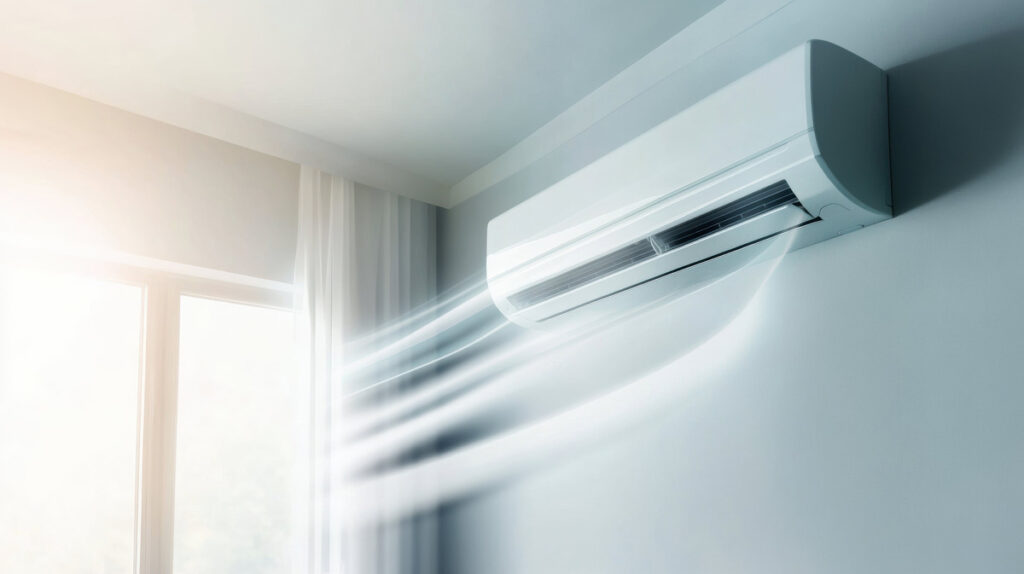
Reverse-cycle air-conditioning is a highly efficient way to keep your home comfortable all year round. Unlike traditional systems that create heat, a reverse-cycle unit—also called a heat pump—simply moves it, making the one appliance an economical choice for both cooling and heating.
It does this by running a refrigerant through a sealed loop. In summer the system absorbs heat from your indoor air and releases it outside. Press “heat”, and a reversing valve flips the flow so the unit draws warmth from the outdoor air—even on chilly Perth mornings—and pushes it indoors.
Because the system shifts energy rather than generating it, every kilowatt of electricity can deliver three to six kilowatts of heating or cooling, trimming your power bills while keeping temperatures steady.
Core Components of Reverse Cycle Aircons
Inside every reverse-cycle unit sits a sealed loop that moves a refrigerant, a special fluid achieving year-round comfort with ease.
The refrigerant switches easily between liquid and vapour, soaking up and shedding heat with efficiency.
Five main parts keep this heat shuffle rolling:
- Compressor: Raises refrigerant pressure and temperature, powering the entire cooling-heating cycle.
- Condenser coil: Hot, high-pressure refrigerant dumps unwanted indoor heat.
- Evaporator coil: Cool, low-pressure refrigerant absorbs room heat quickly.
- Expansion device: Drops pressure so liquid refrigerant chills, ready to lift heat again.
- Reversing valve: The smart part that flips refrigerant flow, letting one system cool or warm your home.
By reversing flow, the unit extracts warmth or indoor heat, so one appliance handles every season.
How Cooling Works with Reverse Cycle Air-Conditioning
When your reverse cycle air conditioner is in cooling mode, it functions much like a standard air conditioner:
- Heat Absorption: Refrigerant in the indoor evaporator coil pulls heat from the room air. As it soaks up that warmth it turns into low-pressure vapour, and the indoor temperature quickly drops.
- Heat Transfer Outdoors: That warm, pressurised vapour then travels through insulated copper lines to the outdoor unit.
- Heat Release: In the outdoor condenser coil the refrigerant dumps its heat into the ambient air, condenses back into liquid, and cools down, ready for the next lap before repeating the closed-loop cycle.
In short, the system lifts unwanted heat out of your home and throws it outside, leaving every room refreshingly cool, calm, and comfortable.
How Heating Works with Reverse Cycle Air-Conditioning
Reverse-cycle systems really earn their keep in heating mode, and it all comes down to the reversing valve:
- Refrigerant Flow Reversal: This valve swaps the direction the refrigerant travels through the pipework.
- Outdoor Heat Absorption: The outdoor unit now becomes the evaporator. Even on frosty mornings (many models still draw warmth at –15 °C) the coil pulls heat from the surrounding air, turning the refrigerant into low-pressure vapour.
- Indoor Heat Release: The warmed vapour heads indoors where the coil now works as a condenser. The refrigerant gives up its heat to the metal fins and a fan pushes that cosy air around your rooms.
- Cycle Repetition: The refrigerant cools down after releasing its heat and is ready to absorb more heat from the outdoors, continuing the heating cycle.
By flipping the flow, a reverse-cycle unit grabs free heat outside and delivers it inside with impressive efficiency, often supplying three to six kilowatts of warmth for every kilowatt of electricity used. On top of temperature control, most modern models clean the air and pull out excess humidity, so you enjoy fresh, balanced comfort right through the year. Ideal for Perth homes all winter.
Principles of How Reverse Cycle Aircons Function
The system operates on the principle of heat exchange, where thermal energy moves from a warmer object to a cooler one, enabling the air conditioner to either remove heat from indoor air (cooling) or extract heat from outdoor air (heating).
This efficient process allows a reverse cycle air conditioner to deliver both heating and cooling with a single unit, maintaining a comfortable indoor temperature throughout the year.

Reverse Cycle vs. Regular Split System Air Conditioners: What’s the Difference?
When you compare cooling options you’ll encounter both “reverse-cycle” and “regular split-system” units. Each uses an indoor and an outdoor unit, so both are split systems, yet they manage temperature in different ways. Understanding this distinction helps you choose the right solution for your home and budget.
Regular Split System Air Conditioners (Cooling-Only)
Built primarily for summer relief, these models operate in a single direction: they pull heat from indoor air and release it outside. Because they cannot reverse the process, you still need a separate appliance (such as an electric panel heater or gas heater) for winter warmth.
Reverse Cycle Split System Air Conditioners
These systems offer genuine year-round climate control. A reversing valve flips the refrigerant flow. In cooling mode the unit removes indoor heat and vents it outdoors; in heating mode it captures heat from the outdoor air, even on chilly Perth mornings, and transfers it inside. Many units also filter and dehumidify the air for healthier living.
Because one reverse-cycle unit handles both tasks, it can replace a dedicated air conditioner and a separate heater, saving wall space, installation cost, and winter energy use. Heat-pump technology often delivers three to six kilowatts of warmth for every kilowatt of electricity, far outperforming electric resistance heaters.
In short, every reverse-cycle model is a split system, but not every split system is reverse-cycle. The reversing valve is the key, giving you efficient cooling and heating in one tidy package.
Wrapping Up
Reverse-cycle air-conditioning gives Perth homes dependable cooling in summer and efficient heating in winter, all from one compact unit. By moving heat rather than making it, the system trims power use, keeps rooms at a steady temperature, and frees up wall space that would otherwise hold a separate heater.
If you are weighing up a new install or looking to replace an older split system, use the points above to compare running costs, understand the core parts, and see how the reversing valve adds real flexibility. Need help choosing the right capacity or booking a tidy, code-compliant air con installation? Get in touch with us at Limelight Electrix. We’re Perth locals, and we back every job with upfront pricing and a free home safety check.
Frequently Asked Questions
How does the refrigerant exchange heat during heating and cooling modes
In cooling mode the indoor coil lets the refrigerant absorb heat from your room. It then moves outside where the outdoor coil releases that heat. In heating mode the reversing valve swaps the job of each coil, so the refrigerant gathers heat outdoors and gives it up inside.
What role does the reversing valve play in switching between modes
The reversing valve redirects refrigerant flow. Select cooling and the indoor coil becomes the evaporator. Choose heating and the valve flips the circuit so the outdoor coil is now the evaporator. One small valve lets a single system handle two opposite tasks.
Why can reverse cycle air conditioners operate efficiently even in cold weather
Modern units use refrigerants that boil at very low temperatures plus variable-speed compressors. These features let the outdoor coil harvest usable heat from air that feels cold to us, then concentrate and deliver that heat indoors while drawing far less power than electric heaters.
How does the cycle of compression and expansion enable both heating and cooling functions
The compressor squeezes the refrigerant, lifting its temperature so it can dump heat at the condenser. The expansion device then drops the pressure, cooling the refrigerant so it can absorb heat at the evaporator. Reversing which coil does which job gives us heating or cooling on demand.
What are the key differences between reverse cycle systems and traditional air conditioners
Reverse-cycle models heat and cool with one appliance, thanks to the reversing valve. A traditional split system only cools, so you still need another heater in winter. Reverse-cycle heating is usually three to six times more efficient than electric resistance heaters, saving energy, space, and running costs.